EN54, UNI 9795: clarity on the standards and on the choice of cable for fire detection systems.
EN 54 addresses connections in terms of operation, compatibility and fault management; the choice of cables and their installation also require system installation standards, in particular UNI 9795 in Italy.
What follows is a reworked technical summary, not an official verbatim excerpt. To assign specific requirements and paragraph numbers, the full texts must be consulted.
Cables and connections in the EN 54 series
EN 54 considers interconnections as paths through which system components exchange signals and, depending on the architecture, power. EN 54-13 covers connections via electrical conductors, optical fibre and radio, also in combination. It does not, on its own, define how to design and install every specific system
| Ref. | Subject | Relevance for cables and connection elements |
|---|---|---|
| UNI EN 54-2:2007 | Control and indicating equipment | Reference for the functions of the control panel, including those related to line management and fault signalling. |
| UNI EN 54-13:2020 | Compatibility and connectivity of components | Assessment of the operation of connected components and of system integrity when interfaced with other systems. |
| UNI EN 54-17:2006 | Short-circuit isolators | Requirements and tests for devices that isolate a short circuit on the connection path. |
| UNI EN 54-18:2006 | Input/output devices | Requirements and tests for modules that receive or transmit electrical signals from or to a transmission path. |
The scopes are confirmed by the official UNI data sheets. EN 54-17 excludes from its scope isolation or protection devices incorporated in the control panel.
This leads to a design distinction: compliance of individual devices with the respective EN 54 parts does not, by itself, prove the compatibility of any combination of them. The connection must fall within the configurations and limits documented for the system; EN 54-13 is the specific reference for this assessment.
Technical choice of cables
It is not correct to derive from the wording “EN 54” alone a universal requirement for cross-section, screening, sheath type or fire-resistance duration.
In practical terms, the choice must take into account:
• electrical characteristics: cross-section, line resistance, voltage drop and required current;
• transmission characteristics: capacitance, impedance, screening and permissible length, when relevant to the protocol;
• architecture: radial lines, loops, spurs and permitted isolation devices;
• environmental and installation conditions: temperature, humidity, mechanical stresses and interference;
• fire performance: reaction to fire and maintenance of functionality required for the circuit.
This is a summary of design verification criteria, not a list of requirements attributable to a single EN 54 clause.
EN 54-17 and EN 54-18 concern the latter: they do not constitute a general certification of any terminal block or box used in the system.
As a technical design criterion, passive elements should be checked against:
- conductor cross-section and type, voltage and current;
- contact stability and protection against stresses;
- installation environment and enclosure protection;
- possibility of inspection, identification and maintenance;
- any continuity of the screen;
- performance required of the connection during a fire.
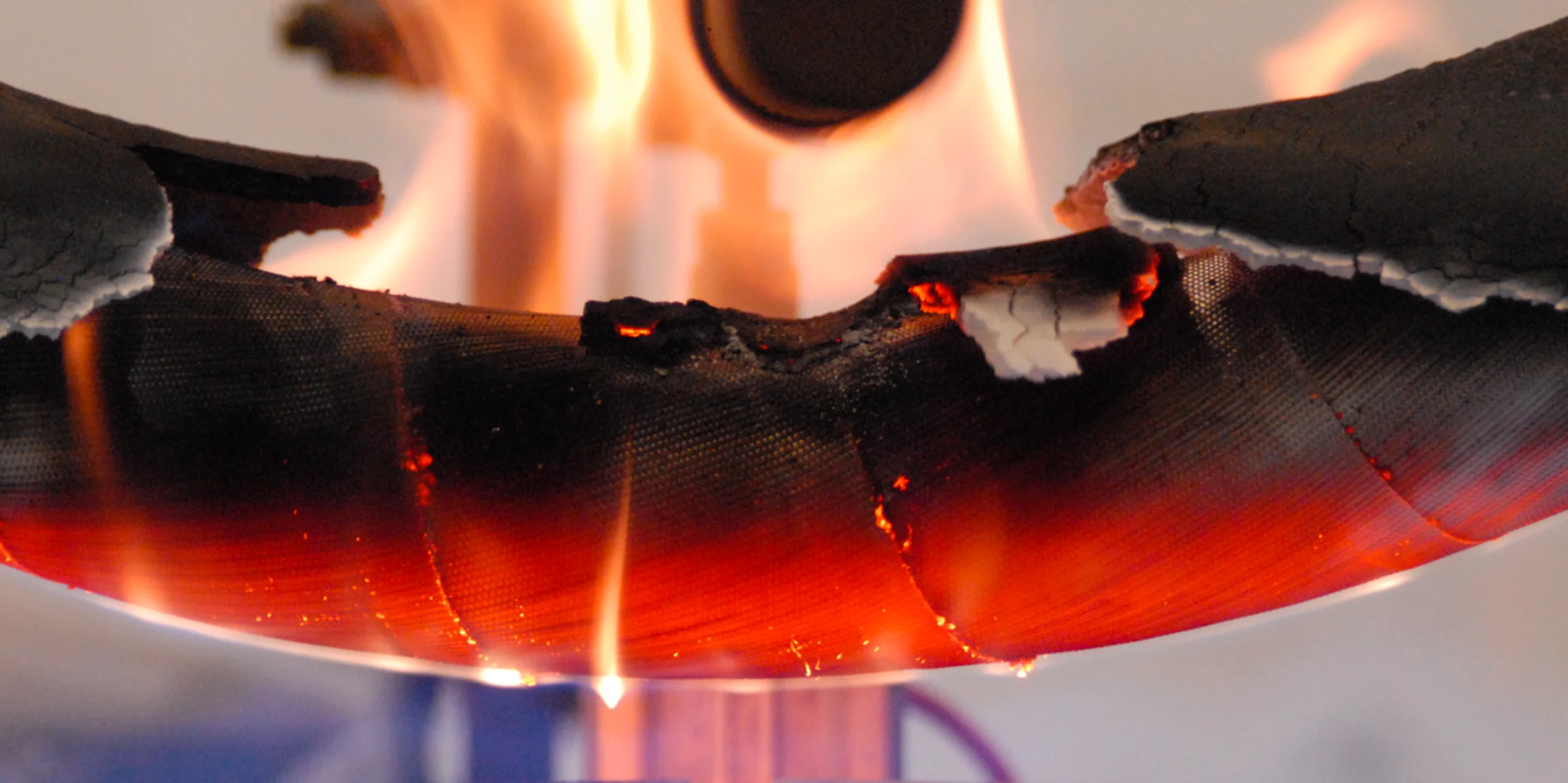
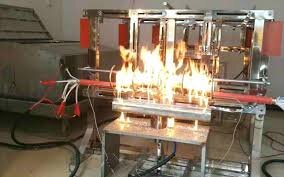
A cable fire-resistance test does not automatically demonstrate the same performance of the complete connection, which also includes joints, terminals, supports and installation method. It is therefore necessary to verify which configuration is actually covered by the technical documentation and tests.
In other words, cable selection must follow the design and electrical characteristics of the chosen components and tie in with many other standards.
| Standard | Technical link |
|---|---|
| UNI 9795:2021, with related errata corrige | Italian reference for design, installation and operation of fire detection and fire alarm systems. It is the standard to consult for system installation requirements on connections. |
| UNI CEN/TS 54-14:2018 | European guidelines for planning, design, installation, commissioning, operation and maintenance. It is a technical specification within the 54 family. |
| CEI 64-8 | General requirements for low-voltage electrical installations, applicable to the relevant parts of the installation. |
| CEI 20-105 | Product standard for cables intended for the applications covered by its scope; the previous edition has been replaced by 2024-09. |
| CEI EN 50200 | Test method for fire resistance of small unprotected cables for emergency circuits. |
| EN 50289-4-16 | Circuit integrity tests under fire conditions for communication cables. |
| CEI EN 50575 | Reaction-to-fire performance of power, control and communication cables in construction works. |
In particular, reaction to fire and fire resistance are two different performances: the former concerns the cable’s contribution to the fire; the latter concerns maintaining functionality under the test conditions. A reaction-to-fire class does not, by itself, prove circuit continuity during a fire.
The selection of cables and connection elements for a fire detection and fire alarm system must be coordinated with the applicable installation requirements, with the electrical and transmission limits declared by the manufacturer, and with the compatibility of the system components. Compliance of devices with the EN 54 series does not replace verification of wiring, joints and installation methods.